What to Wear to an Interview: A Practical Guide for UK Graduates
It’s 9pm the night before your first graduate job interview. You’ve rehearsed your answers, printed three copies of your CV, and mapped the route to the office. Then you open your wardrobe and panic. The one suit you own is from your sixth-form prom, your smartest shirt has a faded collar, and your student loan won’t stretch to a new outfit before tomorrow morning. If that sounds familiar, you’re not alone — we hear this from students and graduates across the UK every single week. The good news is that dressing for an interview doesn’t require a designer budget. It requires understanding what each employer expects and working smart with what you’ve got.
Why Your Interview Outfit Matters More Than You Think

Fair or not, the way you dress shapes how people judge you before you’ve said a single word. Research from Princeton University found that people form judgements about competence, trustworthiness and likeability within a tenth of a second of seeing a face — and visual cues account for roughly 55% of those first impressions. In an interview, your clothes are part of that visual signal. They tell the interviewer whether you’ve read the room, whether you take the opportunity seriously, and whether you’d fit the culture of the organisation.
The Psychology of First Impressions
Interviewers aren’t consciously scoring your outfit, but they are reading it. A clean, well-fitted shirt suggests attention to detail. Scuffed shoes suggest the opposite. Dressing appropriately also changes how you feel: psychologists call it “enclothed cognition” — the idea that what we wear influences our confidence and performance. When you know you look the part, you stand taller, speak more clearly and worry less about your appearance. That mental shift alone can be worth more than any rehearsed answer.
How Dress Codes Vary Across UK Industries
The UK job market is far less uniform than many graduates assume. A graduate scheme at a Canary Wharf bank and a role at a Shoreditch tech startup may both be “graduate jobs”, but the expected attire couldn’t be more different. Turning up in a three-piece suit to a casual creative studio can feel as awkward as wearing trainers to a law firm interview. Our advice: research the employer’s culture, check their social media for photos of staff, and when in doubt, dress one notch smarter than you think you need to.
Decoding UK Interview Dress Codes: From Smart to Smart-Casual
Most UK interview invitations will specify a dress code, but the language can be vague. Here’s how we break down the four codes you’re most likely to encounter.
Smart Formal: When a Suit Is Non-Negotiable
Smart formal means a matched suit — typically navy, charcoal or black — with a collared shirt and formal shoes. It’s standard for law firms such as Clifford Chance, investment banks, and many corporate graduate schemes. Ties are expected in some settings and optional in others; for men, a conservative tie is the safer choice, while women can opt for a tailored suit, a smart dress with a blazer, or tailored trousers with a blouse. If the interview is at a City or Canary Wharf office, assume smart formal unless told otherwise.
Business Professional: The Safe Middle Ground
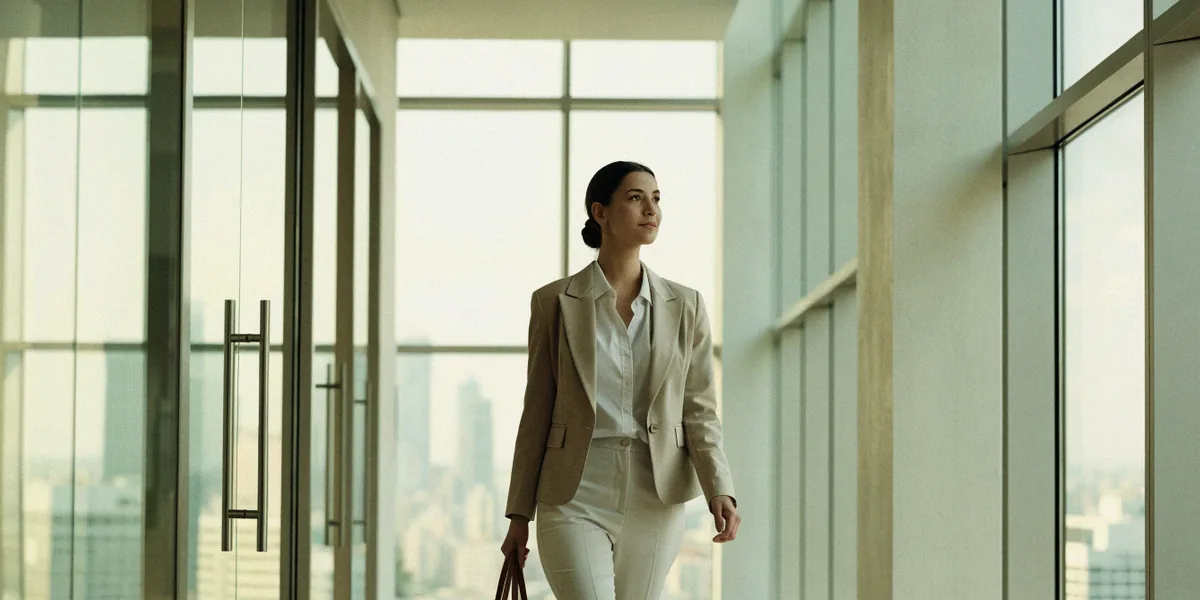
Business professional sits just below smart formal. A blazer with smart trousers or a skirt, or a suit without a tie, fits here. It works well for roles in marketing, HR, operations and many public sector organisations. This is the code we recommend defaulting to when an employer says “business dress” or simply doesn’t specify. It signals respect without looking overdressed.
Smart Casual: Navigating Tech, Creative and Startup Interviews
Smart casual is the trickiest code because it covers everything from “jeans and a nice top” to “chinos and a blazer, no tie”. For tech startups, media companies and creative agencies, smart casual usually means well-fitting dark jeans or chinos, a clean shirt or knitwear, and smart-casual shoes — clean trainers are often acceptable, but muddy running shoes are not. Avoid rips, logos and anything overly casual. If you’re unsure, a blazer instantly lifts a smart-casual outfit into safer territory.
What Not to Wear: Common Mistakes to Avoid
We’ve seen it all, and so have recruiters. Steer clear of:
- Visible creases, stains or pet hair — iron and lint-roll before you leave.
- Strong perfume or aftershave; interview rooms are small.
- Heavily branded clothing, novelty ties or slogan T-shirts.
- Very short skirts, low necklines or trousers that don’t fit properly.
- Brand-new shoes you haven’t broken in — blisters will distract you all day.
- Hats, sunglasses and chewing gum. Obvious, but it happens.
Building Your Interview Wardrobe on a Student Budget
You don’t need to spend hundreds to look the part. A well-fitted outfit from a charity shop will always beat an ill-fitting designer suit — fit is what people notice, not the label. Here’s how we’d approach it.
Where to Shop: High Street, Charity Shops and Online
Marks & Spencer and John Lewis are reliable UK retailers for affordable, interview-appropriate clothing, and both run regular sales. For even tighter budgets, Oxfam and other UK charity shops are goldmines — you’ll often find barely-worn suits, blazers and coats for under £20. Online, ASOS and Uniqlo offer student discounts, and Uniqlo’s tailoring and basics are excellent value. If you only need a suit for one or two interviews, Moss Bros provides suit hire services that are popular among UK graduates and can cost far less than buying new.
The Importance of Tailoring and Fit
A £15 charity shop suit that’s been taken in at the waist and hemmed at the ankle will outshine a £300 off-the-peg suit that hangs badly. Look for garments that fit your shoulders first — that’s the hardest alteration — then budget £10–£20 with a local tailor for adjustments. Many dry cleaners offer basic alterations too. Check sleeve length (should end at your wrist bone), trouser break (a slight fold over the shoe) and jacket buttoning (you should be able to button it without pulling).
Accessories and Grooming: The Finishing Touches
Small details carry weight. Clean, polished shoes, a simple belt that matches them, and minimal jewellery will do more than any statement piece. Keep hair tidy, nails clean and facial hair groomed. If you wear makeup, keep it natural. Carry a plain folder or bag for your documents rather than a backpack if you can. These touches cost little but signal that you’ve made an effort.
Industry-Specific Outfit Advice for UK Graduates
Different sectors have different unwritten rules. Here’s our sector-by-sector guide.
Finance and Banking: Suiting Up for Canary Wharf
Canary Wharf in London is a key financial district where formal attire is expected. For graduate roles at banks, asset managers and insurers, wear a dark matched suit, a crisp shirt and formal shoes. Ties are still common for men in client-facing roles. Women typically wear a tailored suit or a smart dress with a blazer. Keep colours conservative — navy, grey, black — and avoid anything flashy.
Law: Traditional and Conservative
Law remains one of the most formal sectors in the UK. For solicitor and barrister interviews, assume a dark suit, formal shirt and polished shoes. Women can wear a trouser or skirt suit in neutral tones. Avoid open-toed shoes and anything overly fashionable. If you’re interviewing at a City firm, think Clifford Chance rather than casual Friday.
Creative and Media: Expressing Personality Within Limits
Creative roles — media in Manchester, advertising in London, design studios anywhere — allow more personality, but “creative” doesn’t mean scruffy. Smart casual with one distinctive element (a patterned shirt, a well-chosen jacket, interesting but tidy accessories) works well. Avoid full suits unless the company is unusually corporate, and avoid anything too loud that distracts from your work.
Healthcare and Public Sector: Practical and Professional
NHS interviews often require smart attire but not necessarily a full suit. A smart shirt or blouse with tailored trousers or a skirt, plus a blazer, is usually ideal. Avoid dangling jewellery and strong fragrances, and wear comfortable shoes — you may be given a tour of the ward or department. For teaching and local government roles, business professional is the safe default.
Virtual Interviews: What to Wear on Camera
Video interviews on Zoom and Microsoft Teams are now standard for many graduate schemes. The same rules apply — dress as you would for an in-person interview, at least from the waist up — but cameras add a few extra considerations.
Dressing for the Camera: Colours and Patterns
Solid colours work best on screen. Avoid busy patterns, thin stripes and pure white, which can glare. Mid-tone blues, greys, greens and burgundies read well. Keep jewellery minimal — shiny pieces can catch the light and distract.
From the Waist Down: Why It Still Matters
You might think no one will see your joggers, but interviewers notice when you stand up to fetch a document or adjust your laptop. Dress fully, including proper shoes. It also keeps you in the right mindset — you’ll behave more professionally if you feel professionally dressed.
Technical Tips: Lighting, Background and Framing
Position your camera at eye level and sit facing a window or lamp so your face is well lit. Choose a plain, tidy background — a neutral wall or a bookshelf works well. Test your setup on Zoom or Teams beforehand, check your microphone, and silence notifications. Look at the camera when speaking, not at your own image on screen.
Dressing appropriately for an interview matters, but it’s a means to an end, not the end itself. What recruiters ultimately remember is how you made them feel: your confidence, your authenticity and your genuine interest in the role. Use our guidance as a starting point, adapt it to your sector and your budget, and wear something you feel comfortable and capable in. If you look prepared, you’ll act prepared — and that’s what gets you the graduate job.
FAQ
Do I need to wear a suit to every graduate interview?
No. Suits are expected in finance, law and many corporate settings, but tech startups, creative agencies and some public sector roles accept smart casual or business professional. Always check the invitation and research the employer’s culture.
Can I wear jeans to an interview?
Only if the dress code is explicitly smart casual and the employer is known for a relaxed culture, such as a tech startup. Choose dark, well-fitted jeans with no rips, paired with a smart shirt or blazer and clean shoes.
How much should I spend on an interview outfit as a student?
As little as £20–£40 if you shop smart. Oxfam and other UK charity shops often have quality suits and blazers, and ASOS and Uniqlo offer student discounts. Spend a little extra on tailoring so the fit is right.
What should I wear to an NHS interview?
NHS interviews often require smart attire but not necessarily a full suit. A smart shirt or blouse with tailored trousers or a skirt, plus a blazer, is ideal. Keep jewellery minimal and wear comfortable shoes.
Do I need to dress up for a video interview?
Yes. Dress as you would for an in-person interview, from head to toe. Solid colours work best on camera, and a tidy background and good lighting matter just as much as your outfit.